Baby Plate · BabyReco
How much should a 6-month-old eat? Milk, solids and appetite
Small first portions, hunger and fullness cues, and how to fit solid foods around milk without a rigid feeding schedule.
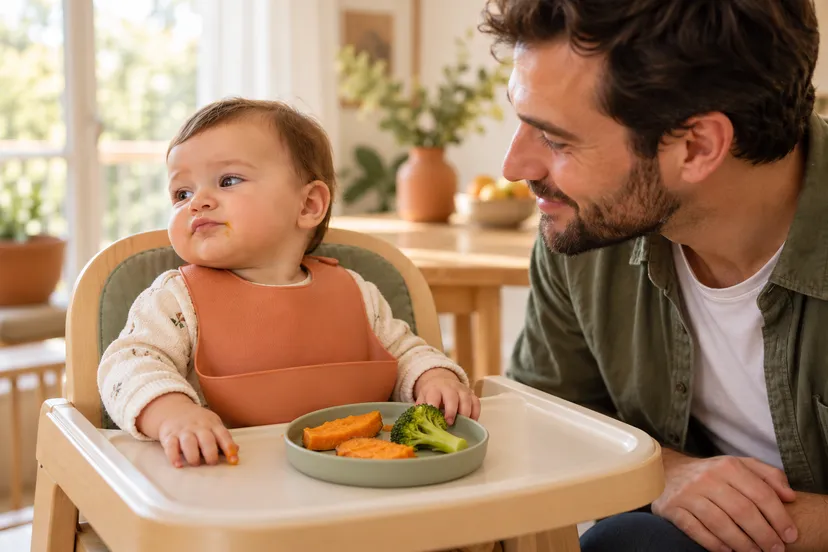
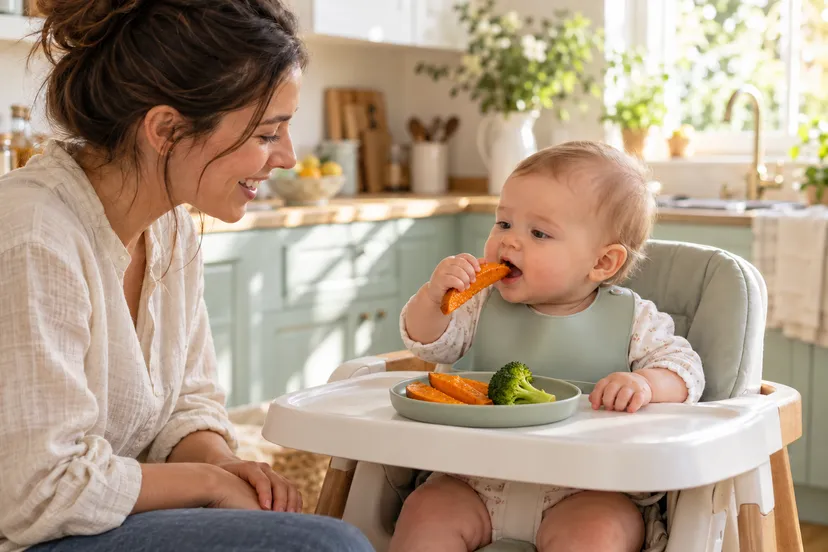
Breast milk or infant formula stays your baby's main source of nutrition throughout the first year. When you start solid foods, you're not replacing milk — you're adding something new alongside it.
The First Spoonfuls
How much to offer
Start with about 1 to 2 teaspoons. Once a day is enough to begin with.
A helpful order to try
- Offer a little breast milk or formula first to take the edge off hunger.
- Offer the solid food.
- Finish with more milk.
This takes the urgency out of the meal and makes the whole experience less frustrating.
Following Your Baby's Lead
Your baby will tell you what they need — you just need to watch for the signals.
Signs they want more: leaning forward, reaching toward the food, opening their mouth.
Signs they're done: turning their head away, keeping their mouth closed, pushing the food away, leaning back.
When your baby shows they're full, stop — even if you feel like they've barely eaten anything. Don't encourage them to take one more bite, play games to distract them into eating, or add sweetener to make the food more appealing. If they're crying or turning away, the meal is over.
Appetite Will Be Unpredictable — That's Normal
Some days your baby will eat well. Other days they'll barely touch their food, or refuse it altogether. Both are completely normal.
A baby's appetite varies day to day, and there's no need to encourage them to finish a portion. Let your baby guide how much they eat at each meal.
What Not to Do
-
Don't force or pressure them to eat.
A baby should never be made to finish what's on their plate or accept food they're refusing.
-
Don't use tricks or games to get more food in.
Airplane spoons, bribes, and distraction tactics might seem harmless, but they work against your baby's ability to recognize and respond to their own hunger.
-
Don't offer sweets as an incentive.
Offering something sweet to get them to eat the main food isn't recommended.
-
Don't use food as comfort or reward.
Food works best when it stays connected to hunger, not emotions or behavior.
When to Talk to a Professional
Talk to your pediatrician or healthcare provider if you are not sure whether your baby is ready. Individual advice is especially important if:
- Your baby was born prematurely
- Your baby had a low birth weight
- Your baby has delays affecting movement or coordination
- Your baby has another medical condition that may affect feeding
Sources (English)
- NHS · Your baby’s first solid foods ↗
- CDC · When, what, and how to introduce solid foods ↗
- CDC · Signs your child is hungry or full ↗
- CDC · How much and how often to feed ↗
- CDC · Choking hazards ↗
General information, not individual medical advice. Speak to your child's healthcare professional about feeding concerns.