Baby Plate · BabyReco
Starting solids: your baby's first week
Introducing solids around 6 months: signs of readiness, the first spoonfuls, and a calm way to begin alongside milk feeds.
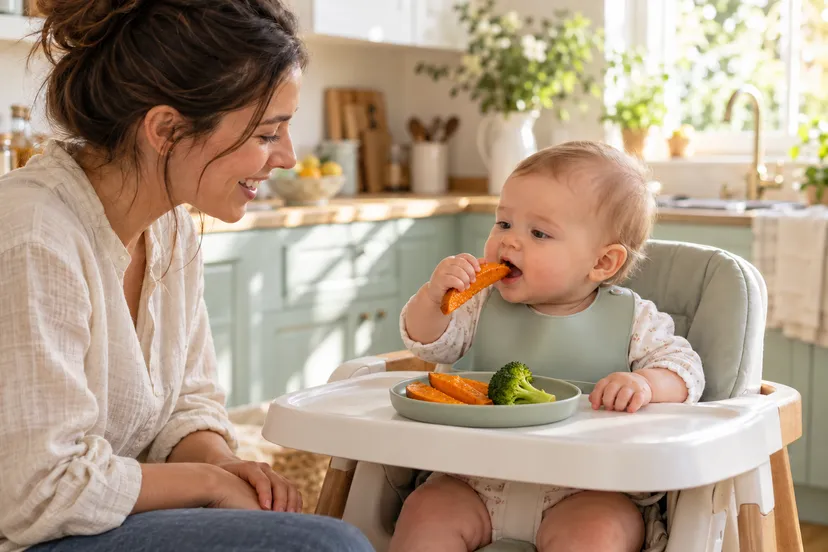
Introducing solid foods is usually a gradual process. In the beginning, your baby will still get most of what they need from breast milk or formula. At first, solid foods are mainly about learning new skills, getting used to new textures, and becoming familiar with eating. A calm and simple start is usually best.
Signs Your Baby Is Ready for Solid Foods
Age gives a helpful starting point, but it is not enough on its own. Some babies show signs of readiness a little earlier, while others need more time.
A baby is generally considered ready to begin eating solid foods when several key developmental signs appear together:
-
Sits with head control
They can sit upright with support, lean forward, and hold their head steady.
-
Shows interest in food
They watch others eat closely, reach toward food, or open their mouth when food comes near.
-
Brings food to the mouth
They can look at food, pick it up, and bring it to their mouth.
-
Swallows food
They can keep food in their mouth and swallow it, instead of pushing it straight back out with their tongue.
-
Shows they've had enough
They turn their head away, lean back, close their mouth, or lose interest when they are full.
Getting Ready
A little preparation can make the first meals calmer and easier.
-
Choose the right moment
Pick a time when you're not rushed and your baby is alert and in a good mood — not overtired or very hungry.
-
Get set up
Seat your baby upright in a high chair before you start. You'll also need a small spoon — baby-sized, not a regular teaspoon.
-
Cut the distractions
Turn off the TV and put your phone away. Eating is a new skill, and your baby needs to focus.
-
Sit face to face
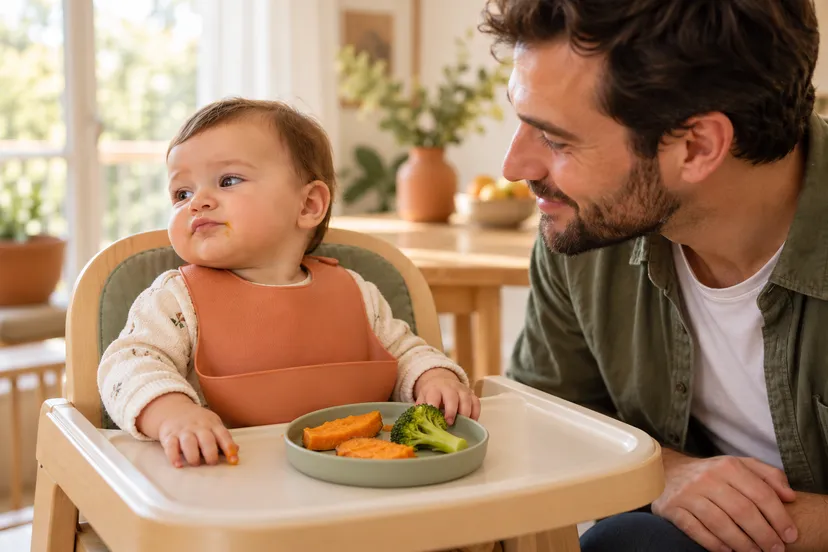
Sit in front of your baby so you can make eye contact and stay focused on the meal. Talk to them softly as you go.
-
Prepare for mess
Most of that first food will end up on their face, hands, bib, or the floor. That's completely normal — have a cloth nearby and try to stay relaxed. Letting your baby touch and explore the food actually helps them develop self-feeding skills over time.
The First Spoonfuls
How much to offer
Start with about 1 to 2 teaspoons. Once a day is enough to begin with.
A helpful order to try
- Offer a little breast milk or formula first to take the edge off hunger.
- Offer the solid food.
- Finish with more milk.
This takes the urgency out of the meal and makes the whole experience less frustrating.
Safety Reminders
-
Always stay close
Never leave your baby alone during a meal. You need to be there to watch for choking or any unexpected reactions.
-
Don't add cereal to a bottle
Adding infant cereal to a bottle is a choking risk, can lead to excess weight gain, and prevents your baby from learning how to eat from a spoon.
-
No salt or sugar
Salt puts strain on a baby's developing kidneys. Sugar promotes tooth decay and builds an early preference for sweet food. Neither belongs in your baby's meals.
When to Talk to a Professional
Talk to your pediatrician or healthcare provider if you are not sure whether your baby is ready. Individual advice is especially important if:
- Your baby was born prematurely
- Your baby had a low birth weight
- Your baby has delays affecting movement or coordination
- Your baby has another medical condition that may affect feeding
Sources (English)
- NHS · Your baby’s first solid foods ↗
- CDC · When, what, and how to introduce solid foods ↗
- CDC · Signs your child is hungry or full ↗
- CDC · How much and how often to feed ↗
- CDC · Choking hazards ↗
General information, not individual medical advice. Speak to your child's healthcare professional about feeding concerns.